

Whenever the news gets particularly spicy, comedians are faced with a choice. We can write jokes and shows which tackle those current events directly; or we can ignore them completely, and focus our funny on kebabs or dating apps, or perhaps on developing a new prop routine which involves shoving a muffin up an orifice whilst wearing a mankini and blasting progressive death metal under some strobe lighting.
(For the record, I consider both approaches to be equally valid. Some of my best friends are clowns.)
We faced this choice after the pandemic. As festivals returned, there was a plethora of shows reflecting on the funny side of the plague and lockdowns. But there were also plenty of comics who deliberately chose to eschew any mention of COVID, figuring that all the best jokes had already been tweeted, and that discussing the novel coronavirus was now anything but novel.
I took the first approach. My 2021 festival show, We Are All In This, was an hour of stand-up and funny PowerPoint pictures focussed exclusively on how depressing and bonkers the previous 12 months had been, taking on COVID, vaccines, the murder of George Floyd, Australia’s devastating 2020 bushfires and our elites’ hollow calls for “national unity”.
The show would go on to be described by one reviewer as both “comprehensive” and “exhausting”.
This was certainly me leaning in. Any audience member hoping to forget all their troubles from the past year and switch off for an hour was sure to be disappointed. But for me – for the kind of comedy I like to make – there was no other choice. The last year had been absolutely insane…so we definitely should talk (and laugh) about it, right? Yes, any comedy show’s number one priority must be being funny – but don’t we also want a few folks out there discussing what’s actually been happening outside the walls of the venue? To try and make some sense of it?
I’m not saying political comedy is any better or worse – certainly no more “worthy” – than any other genre. I love silly, escapist, joyful and deeply personal shows as much as the next punter, and the last thing I’d want to do is tell a comic with no interest in politics to start cracking out the satire for the sake of “doing their duty” (haha, “doo-ty”, etc.).
But I do really love comedy that engages with the news. At its best – when it’s coming from the likes of Josie Long, Nish Kumar, Andy Zaltzman, Bill Hicks, Chris Rock, Bridget Christie, Wanda Sykes or Rod Quantock – political stand-up has the capacity to make us laugh, think and rage against the injustice of the world. A great punchline can help us appreciate the truth about our collective clusterfuck in a new way (in a real way – not in the way it’s depicted by the mainstream media). Political comedy can serve as a reminder that no, we’re not crazy; the people in power are cretinous fools, our society is deeply unjust, and we do deserve better than this.
Yes, comedy can help us escape the horrors of the real world – but it can also help us look those horrors directly in the eye.
That’s why, right now – when I feel like we’ve come to another fork-in-the-road moment of Hot Wings-levelspicy news – I can’t help but notice political comedy’s absence. Even though the world isn’t any less mad in 2026, I feel we’ve been seeing a significant reduction in the number of comics who are willing to wade into the thorniest political issues of the day. (And yes – you know which ones I mean.)
I really noticed this trend during the Melbourne Comedy Festival. Over the month, I saw lots of funny shows made by very funny people about all sorts of topics, but – apart from a few exceptions – I heard zero references to the fact that we were at war with Iran, that Australia had just experienced its worst domestic terrorist attack, that our country had been complicit in an ongoing genocide, that we’d all been living through a relentless assault on our right to protest, or that the far right was experiencing a record surge in support.
Which was a bit odd, as I would argue all those things are quite a big deal. I couldn’t help but be bothered by the disconnect between what I was seeing on the news and on my phones every day, and what comedians were choosing to talk about every night onstage. And when comedians who normally make it their business to joke about the big stories of the day suddenly to vacate the field and seem to be deliberately trying to talk about anything but what’s going on, it feels…eery. Gaslight-y.
Could the same be true of this year’s Edinburgh Fringe? The festival has around 1600 registered comedy shows, and a search for the word “political” in the comedy section yields just 28 results (three of which belong to Matt Forde), while “politics” yields just 16. Even then, many of these shows seem to be focussing on political events of the past: from A History of the Last Conservative Government (In Their Own Stupid Words) to The Last Days of Liz Truss? to Bush! The Musical.
I can appreciate why this might be the case. There’s surely a level of exhaustion with the chaos of political news, on the part of both performers and audiences. The past decade has been so relentless and weird and horrifying – and the brutal cost of living crisis so prolonged – that lots of people might want their comedy to grant them a blissful holiday from it all.
Plus, there’s the question of how to be funny about politics at the moment, when politics are already so ridiculous and funny. What else is there to say about the weird things Donald Trump says, or his blatant corruption? It gets to a point when even just recounting the latest headlines onstage feels like putting a hat on a hat. (Or, in the case of Reform, putting a pith helmet on a Klan hood.)
My concern, though, is that much of the silence coming from political comics is due to self-censorship. Over the past three years, we’ve all seen the cost that some people are forced to pay for the crime of speaking up for the truth and for basic moral principles on the question of Israel/Palestine: being labelled as a terrorist, losing one’s job, being mercilessly dragged through the mud by the right-wing media. Israel’s defenders are happy to smear anyone who dares to put their head above the parapet, from doctors to comedians to the Pope and Ms. Rachel. It’s no wonder that some artists might ask themselves, “I guess I could talk about this massive, horrifying elephant in the room, but…is it really worth the risk? Is it worth the hassle? Is it even worth trying?”
And I think that’s a darn shame. If political comedians stop making jokes about the biggest things happening in the world right now out of fear or avoid criticism from bad faith actors, well…we may as well pack up and go home. We’re only letting the arseholes win.
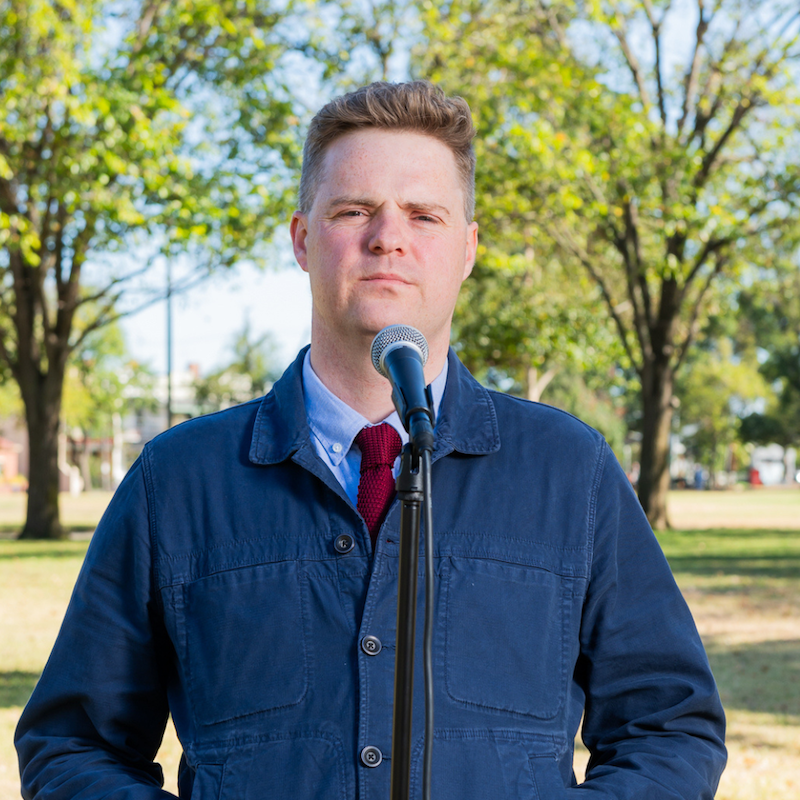
I’m trying to do my part. In 2026, I am once again leaning in. My Fringe show Be Funny Challenge (Impossible) is an attempt to have a crack at all the spiciness of right now: Neo-Nazis, free speech, the evils of anti-Semitism, the demonisation of the pro-Palestine movement and the hysterical culture wars of the past three years. (Don’t worry, I’ve made another PowerPoint.) I’ve committed myself to really trying to reckon with the state of things right now, as bleak as they are, and to say as many funny and true things about the news and this political moment as I can.
Why not? After all, our freedom to speak and joke about the state of things might not be around for much longer, what with all the fascism and such.
We might as well try to get the punchlines and the truth out there while we still can.
Tom Ballard: Be Funny Challenge (Impossible), 16.25. O Neill’s @ Monkey Barrel
https://www.edfringe.com/tickets/whats-on/tom-ballard-be-funny-challenge-impossible
,