

Guy Masterson vividly remembers being in Elizabeth Taylor’s home in Bel Air on the day Rock Hudson died.
“Her daughter Maria said: ‘Mum’s not coming down today.”
That day in 1985 was a turning point in Liz Taylor’s life – leading her to become a campaigner who raised millions and helped change attitudes towards AIDS – by putting pressure on the United States government via her friends Ron and Nancy Reagan.
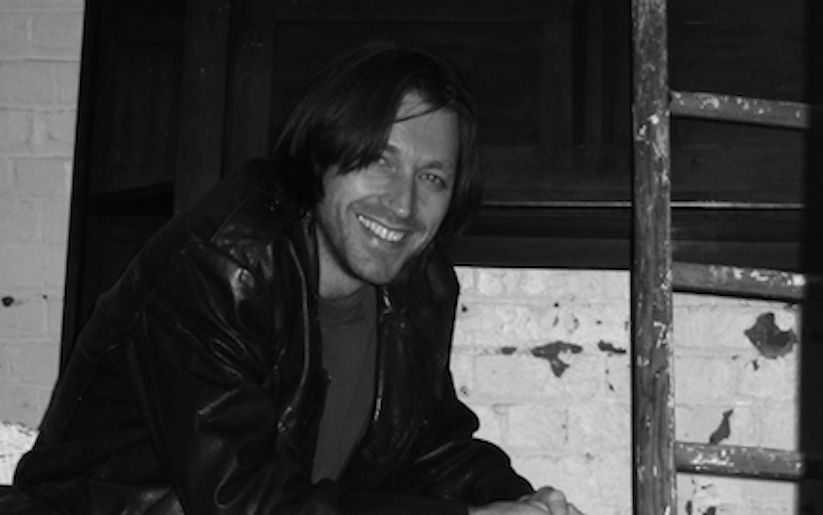
Liz Taylor’s activism is front and centre of a new one woman play Call Me Elizabeth: From Burton to Humanitarian, performed by American actress and performer Kayla Boyle, with input from Masterson – whose mother was Richard Burton’s aunt.
Masterson, whose pedigree as an actor, producer and writer includes award winning productions in the West End, Broadway and the Edinburgh Fringe, first came across Boyle in 2023, when she performed a play based on Taylor’s rise from child star to Hollywood icon.
After watching her performance Masterson introduced himself, and told Kayla that he was closely related to Burton and had grown up knowing Taylor as ‘Aunt Elizabeth’. He agreed to act as adviser and dramaturg for part two of the Liz Taylor story – lending his own insight into her extraordinary life.
Call Me Elizabeth, Parts One and Two will run at Assembly George Square, with Part One: From Lassie to Cleopatra and part Two: From Burton to Humanitarian, running on alternate days.
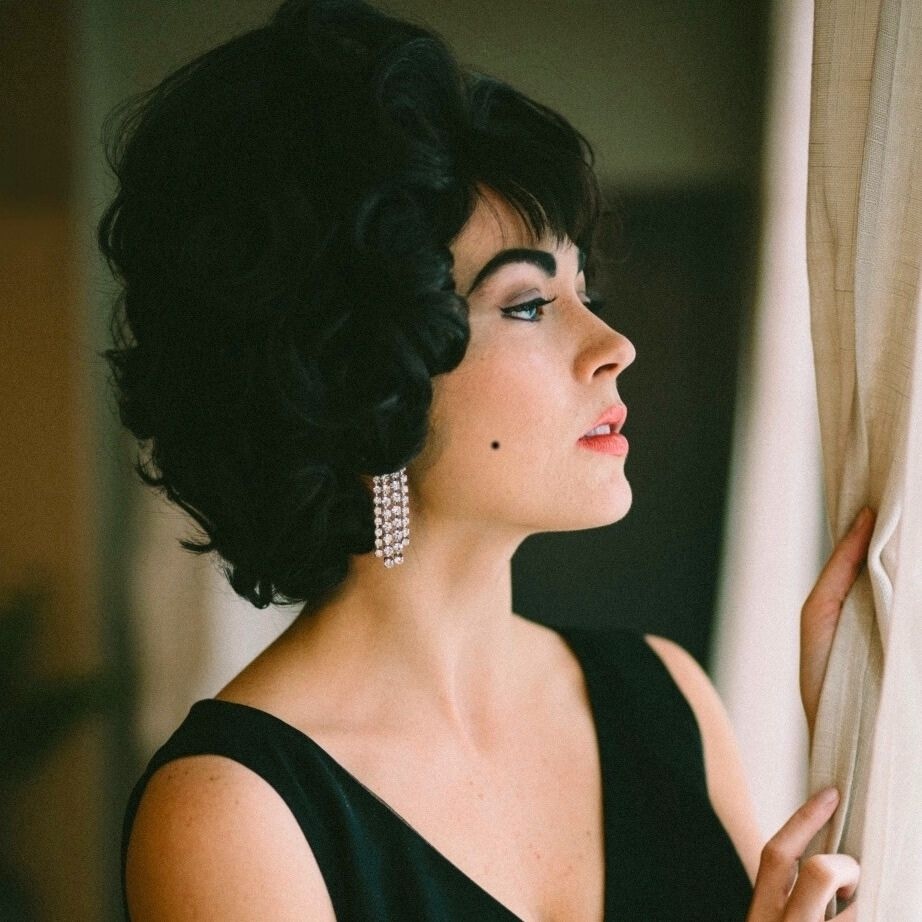
Boyle employs vintage costumes, flamboyant wigs, paste jewellery and startling blue contacts to embody Elizabeth Taylor on stage. But working with Guy Masterson has brought her closer to the real inner life of the Hollywood icon.
As a small boy Masterson was particularly impressed by the cars – by the Rolls Royce and the Bentley that brought his aunt and uncle when they came to visit. He remembers watching films with the family on their yacht Kalizma, and spent time in their homes in Switzerland and California.
But it was only when he went to boarding school that he realised how famous Burton and Taylor were. He was bullied relentlessly for a year and accused of telling lies after he piped up ‘That’s My Uncle’ when watching the wartime drama ‘Where Eagles Dare’ with his schoolmates.
Not until his Aunt and Uncle sent a signed photo to his headmaster did the bullying stop. After that, press clippings about the outrageous highs and lows of their love affair landed regularly on his desk at school.
As an adult Masterson would spend weeks on the road with Burton, learning first-hand about his relationship with acting, alcohol and Aunt Liz.
He remembers his Welsh grandmother pleading: ‘Don’t let him drink’ as they set off to drive to Paris. And as they crossed Europe his famous uncle shared stories about life, success and always about Elizabeth.
“They never stopped loving each other – but they couldn’t be together. He told me that.
“But they called each other every day.”
Masterson collaborated with Kayla Boyle on Part Two of Call Me Elizabeth, by sharing his own recollections and stories from the family. He also persuaded her to drop the conceit of staging the drama in interview format – instead switching to a first-person style, giving the audience the feeling of listening to her thoughts. It’s a technique he has successfully used in many of his own one person shows.
He said: “We all love biographies. By making it in the present tense it really helps the audience feel they are in the presence of the person.”
More than anything Kayla Boyle says Masterson helped her realise how important their shared sense of fun was to Burton and Taylor.
She says: “Despite the fabulous, glamorous lives they lived they had a real sense of humour. Talking to Guy helped me bring out the jokes and laughs they had together.”
According to Guy Masterson this was the real secret behind the great love affair. “She wouldn’t have been able to hang onto Richard for so long if she hadn’t made him laugh.”
In her later life Taylor was beset by health problems, her star was fading and she never got over Burton’s marriage to Sally Hay.
Masterson recounts how members of the family staged an intervention, letting Taylor know the effect her blackouts were having on the people around her. When the actress left the Betty Ford Clinic, she resolved to honour her close friends James Dean, Montgomery Clift and Rock Hudson by challenging the fear and darkness surrounding the AIDS epidemic.
He says: “She’d always been surrounded by gay men. She felt safe with them. And she decided to do something meaningful with the rest of her life.”
Understanding the power of her humanitarian work gave Boyle a new appreciation of the true steel and determination of Elizabeth Taylor.
Kayla says: “I feel she had quite a bit of strength – to survive everything she experienced throughout her life.
“She used her fame and her talents to help other people which is what life is all about.”