

In Erotic Vagrancy, his entertainingly excessive memoir of the excessive lives of Richard Burton and Elizabeth Taylor the author Roger Lewis paints a portrait of the couple in shades of vulgarity, violence, appetite and monstrosity. Taylor, he suggests, was a pill-popping “bundle of appetites” with a magpie eye for all that glitters (jewels and men). When describing an operation she had on a benign brain tumour, he adds, it was “the only chunk of her which was”.
Lewis’s book veers between love letter and assassination attempt. It’s fair to say that Kayla Boyle’s two-part theatrical monologue covering the life and times of Taylor is more straightforwardly celebratory. But Taylor’s penchant for drama – in life and art – is certainly given its due
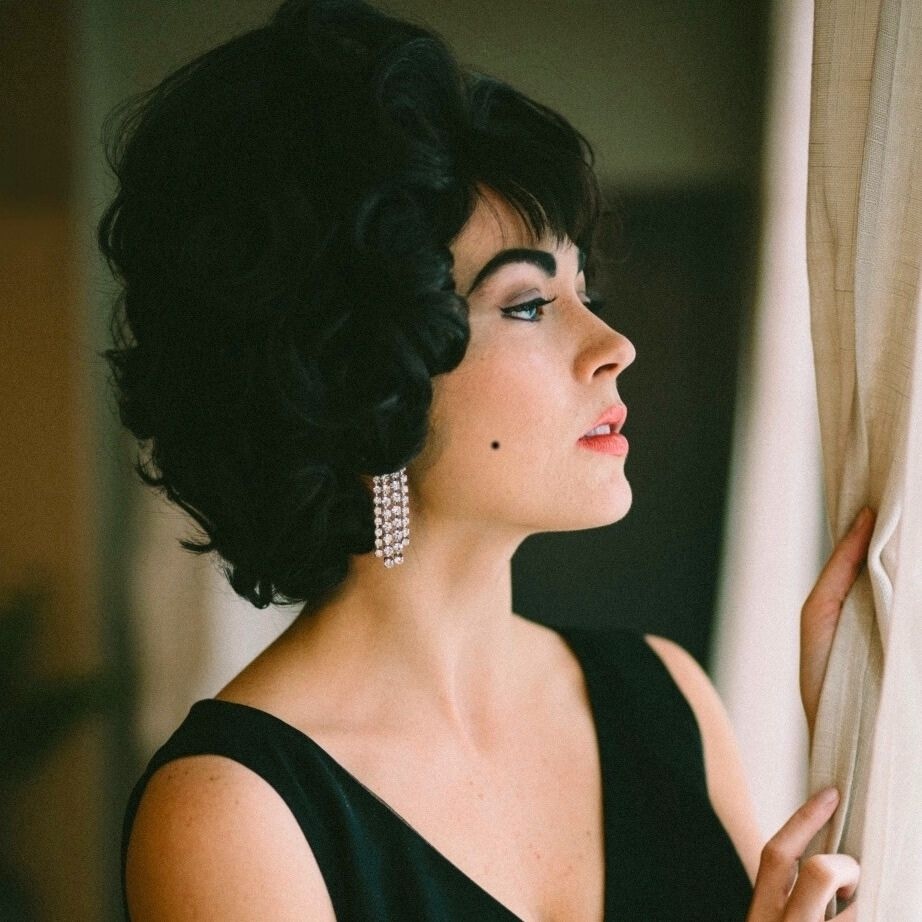
Which is why the life of the star of Cleopatra is so well suited to a theatrical interpretation. Boyle, who writes and performs both shows, isn’t attempting a note-perfect impersonation here. She wears Taylorish wigs and black cocktail dresses, and lets the story do the heavy lifting as she talks us through the highs and lows of a life that began as a child actress and took in friendships with the likes of Montgomery Clift, James Dean, and Roddy McDowall, as well as eight marriages (including two to Burton), newspaper scandals, domestic abuse (her first husband Nicky Hilton was violent towards her; one physical attack led to a miscarriage), papal condemnations and a lot of diamonds.
Oh, and name-dropping. A lot of name-dropping. At the start of the second show, alone, Taylor/Boyle speaks on phone to Michael Jackson, Frank Sinatra and Ronald Reagan within the space of a few minutes.
We are effectively getting an audience with Taylor here. This is own story told through her eyes. Set in a suite in the Beverley Hills Hotel, first in 1961 and then in 1985, Boyle as Taylor talks us through the events of a gilded life, and all its triumphs and tragedies.
As well as providing a solid structure that elegantly moves back and forth in time, Boyle the writer gives Boyle the actor plenty of good lines and the whole thing has a peppy bounce to it, particularly part one. Part two has a slightly more subdued tone, in part because it covers Taylor’s AIDS activism at a time when no one else in American public life wanted to be associated with what was cruelly being called a “gay plague”. Taylor at her most admirable.
Boyle isn’t using Taylor’s life as a vehicle for any interrogation of Hollywood or American life here, though the sexism and misogyny she was subjected to throughout is in plain sight. Its ambition is really just to tell the story well and it succeeds admirably at that. This is a slick, well-mounted, gossipy entertainment. Sometimes that’s more than enough.
Call Me Elizabeth: from Lassie to Cleopatra
Assembly George Square Studios (Studio Two), 15.30pm, August 11, 13, 15, 19, 21, 23, 25, 27 & 29
Call Me Elizabeth: from Burton to Humanitarian
Assembly George Square Studios (Studio Two) 15.30pm, August 14, 16, 20, 22, 24, 26, 28 & 30
https://www.edfringe.com/tickets/whats-on/call-me-elizabeth-from-lassie-to-cleopatra