
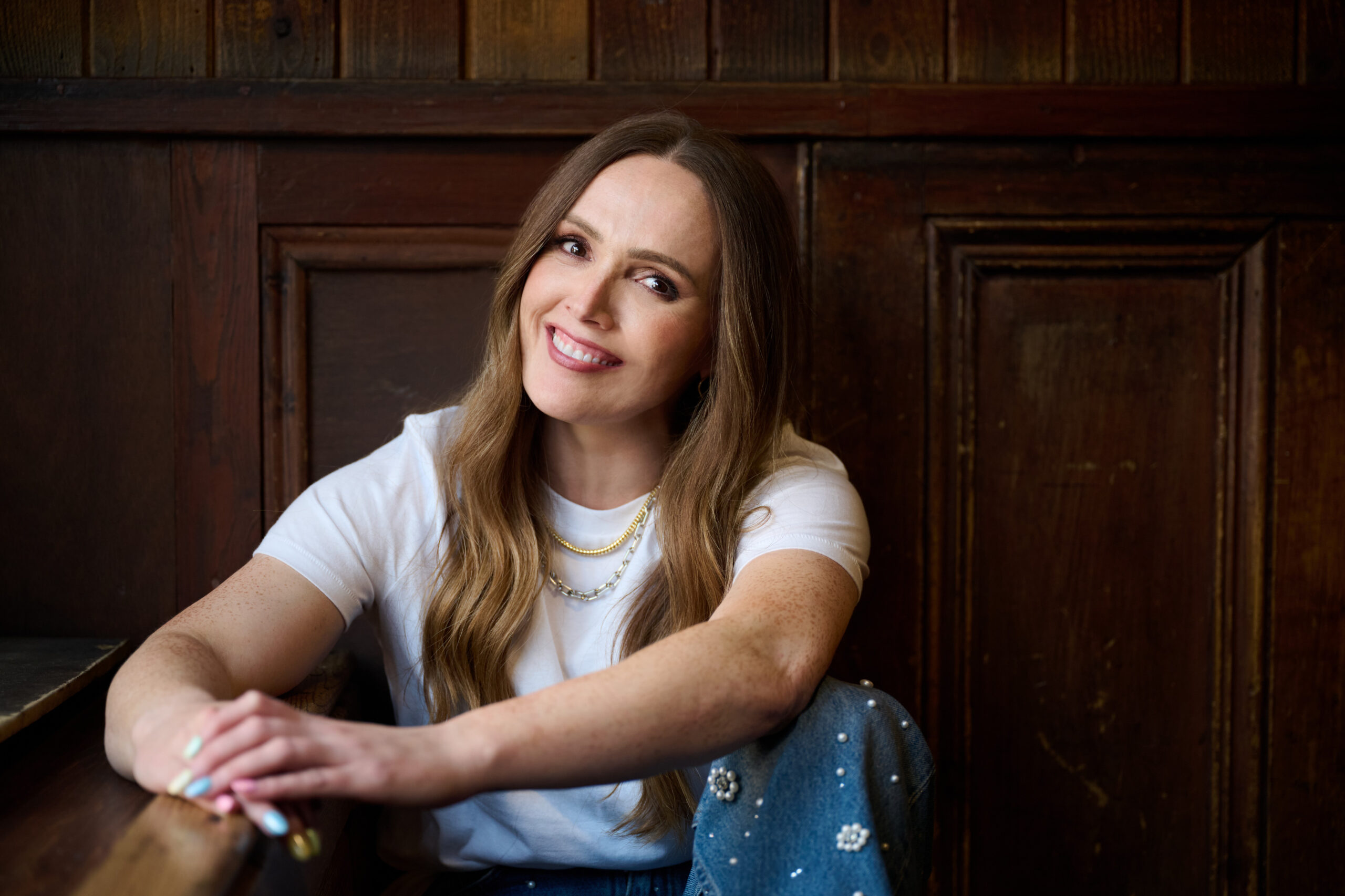
Emma Doran has been doing stand-up for 13 years now. It’s going pretty well. She’s even playing the London Palladium later this year. So, it’s no real surprise, then, that she’s playing the Edinburgh Fringe this summer.
What might be a surprise is that she’s never done the Fringe before. How is that even possible? For most comedians booking a gig at the Palladium comes after the Fringe not before.
The reason is pretty simple though. Through all those years of stand-up the teenage single mum turned fortysomething comedian simply couldn’t afford to come to Edinburgh.
“A lot of that time you’re really poor,” Doran tells me as she sits at home in Dublin. “Nobody talks about this. You really don’t have any money. And I had a young family as well.”
Well, yes. Dublin-born and raised, she was still a schoolkid when she became pregnant with her daughter. She did her first stand-up gig just weeks after the birth of her first son. Now she’s a mother of three – “My youngest is now 11 so I am definitely coming out of the haze” – and the star of the Irish version of Last One Standing.
So, bringing her latest show, Emmaculate, to the Pleasance Courtyard this summer is a tad overdue. She’s still slightly unsure it’s a wise move.
“I suppose to us in Ireland for a long time the Fringe sounds like a bit of a pyramid scheme. Now, I’m still not fully convinced that it’s not. I tried to keep the ego at bay and said, ‘I’ll go when I feel people want to see me.’ So, I’m going this year.”
It’s safe to say that people want to see her these days. Doran is one Ireland’s favourite comedians, with her countrywoman Joanne McNally saying she’s “one of the funnest humans I’ve ever encountered.” Doran is frank, open and honest about her own story, which may be the key.
In some ways Doran has bypassed the rite of passage that is the Fringe via the use of social media. She regularly posts videos and turns up on podcasts (most notably Keep It Tight, the weekly podcast she co-hosts with fellow Irish comedian Deirde O’Kane).
“My natural disposition is not to be a social media person,” Doran admits. “I would be the person who would go on holidays and come back with three photographs. And two of them would be blurry. It’s not my natural go-to.”
But in the days before she started turning up on comedy panel shows, she started making her own stuff on her phone, “probably out of frustration”, she suggests.
“This was back when I started stand-up, so there wasn’t any Instagram, there wasn’t maybe the same culture of people posting online. It literally just did start as an outlet and then actually I was like, ‘Oh, you can reach people by posting on social media.’
“Now I just see it as another part of stand-up comedy. I’ll do a video during the day and I’ll do my gig at night.
“It’s just a different type of audience. I suppose the audience on their phone could be watching Rivals at the same time. You’re competing in that way.”
Her show Emmaculate is, Doran suggests, a “love letter” to all the women in my family. “I put that in inverted brackets because how I express affection is ripping the piss out of them, basically.”
“My mother came to see the show and I was quite nervous because there’s a lot of her in it. She just came up to me all smiles and said, ‘I love the character you created for me.’
“When I started out I probably told gags more. You just start doing stuff from your own life and putting it onstage and hoping everyone in your life is OK with that.”
That openness is , of course, at the heart of Doran’s appeal. When she started stand-up at the age of 29 she was willing to talk about becoming a teenage mum. But then what else was she going to talk about?
“Lots of my peers were talking about the year they spent in Australia or whatever and people were saying to me, ‘Oh, your stuff is so relatable, so down to earth.’ But I haven’t been anywhere. I haven’t done anything. This is all I can write about. I don’t really have any other experience.”
It’s also an act of reclamation, you could argue. To be a teenage single mum in 1980s Dublin was not easy. Inevitably, it came with shame and stigma attached.
“If I’m completely honest I talk about it in a funny way, but it took a lot of time to shake that off,” she admits.
“The thing that really helped me is I have a gorgeous family. So, their attitude was, ‘Yeah, OK, that’s a spanner in the works, but let’s all support her.
“I had my daughter in May, but they were like, ‘You’re going to college in September.’ ‘Will I?’
“I definitely did feel people had to make sacrifices so I could go to college and finish my education.
“When you are living it, it doesn’t feel like a great thing. You don’t feel the same as your peers. You don’t really know where you fit.”
In the end she found the place where she fitted was stand-up. “That’s the thing about comedy. That’s where all the weirdos go.
“It just took time, but, actually, doing comedy really helped. I’ve had so many people tell me their stories. I met a woman the other day. I know her. I see her all the time and would have known about her family.
“And she is in her fifties and she only told me that she had her daughter when she was 20 and she said to me, ‘It’s funny. I was listening to you speaking and I remember sitting on the stairs of my parents’ house listening to his parents and my parents talk about my future and what was to be done with me.’
“She wasn’t involved in the conversation. I could tell by the way she was telling me, ‘Oh, she hasn’t thought about this in like 35 years.’”
It’s why Doran tells her own story. “Sometimes I cringe. ‘Emma, stop banging on about it.’ But I always get asked about it. People who have been through it, they never forget it. I’ll give myself a bit of slack on that.”
Doran grew up watching Alan Partridge, Beavis and Butthead, Billy Connolly and Tommy Tiernan on telly. But a career in comedy didn’t really seem like a possibility to her. “Stand-up, to me, that seemed like a crazy thing. I didn’t know anyone who did it. I just couldn’t figure it out at all.”
After college she did try to pursue a career in the media, working in TV production. But it didn’t really fit with being a single parent.
“You’re leaving the house at six in the morning or earlier. And what time will you be home? You don’t know. And then you’re losing money, if anything.”
She kept at it for a while, though. And then at an audition for a TV prank show – “I was actually pregnant at the time with my son who’s now 13” – the show’s director suggested she should stand-up.
“So, I signed up for an open mic night. I had my son. I waited until he was born, but he was only a few weeks old and I said I’m going to do stand-up and my partner was like, ‘What the hell is happening?’
“But I actually felt really good. So, I signed up for a local mic night and then I went the week before just to see what it was like. I didn’t have any social life. I had maybe been to a couple of comedy shows, but it wasn’t like I was going into the comedy club every Wednesday night.
When I went to see it I felt OK. Because some of the people were good, but some of the people were horrifically shite. I couldn’t believe that they thought for a second that this was going to be a goer.
“But what I loved was that the audience were so nice to them. It’s not that they faked laughter. But they just sat there. And I thought, ‘Right, that’s the worst that will happen. I’m going to get sIlence.’
“I thought it would be like Eight Mile, Eminem. I thought people would be throwing chairs, fights breaking out and booing you offstage.
“People heckling. It’s so rare. People want you to make them laugh. They’re just sitting there going, ‘Oh, please say something funny.’”
How soon did Doran say something funny? On that first night?
“Yeah, I did. Now I haven’t watched it back in years – because I actually recorded it. It’s not too bad. It takes a long time to get to the jokes, which is a totally new person thing. And I turned up two hours before the gig and I was like number 11. I arrived. ‘I’m here to do the stand-up.’ And they were like, ‘Great, whatever.’
“It was obviously a big deal to me. I was like, ‘This is it. I’ve found the thing.’ And then I was totally obsessed. That was the end of my life as I knew it.”
Doran may have been a late starter to comedy but she has made up for that in the years since. “I look back and go, ‘Oh God, I wish I’d started sooner.’ But I don’t think I could have. I started when I was 29 and I’m glad that I had that little bit of time behind me because I had lots of stories and lots of life experience.”
Alongside Aisling Bea, Deirde O’Kane, Joanne McNally and Diona Doherty, Doran is part of a new wave of Irish female comedians who are coming to the fore. It represents a definite shift in Ireland’s comedy story.
“When I was coming up, if there was a female comedian on the bill it was kind of a novelty act. ‘Stick her on in the middle.’ I remember asking a club to MC because I wanted to build up my skill set, get as bookable as possible and obviously get more money, and I was told, ‘Oh audiences don’t like female MCs’. These stats were just obviously made up.
“The thing that nobody really saw coming in comedy clubs is that women buy tickets for comedy. Women are great at organising nights out. They’re just like, ‘Fuck this, I need to go and have a night out.’
“Men are more casual. They might meet their friends at the pub, or the match. Things that don’t need planning. Getting tickets for comedy shows requires planning and women innately are planners.
“For a long time we went to comedy shows and listened to a male comedian; very funny, very enjoyable. But then these female comedians started coming through, also very funny, very enjoyable. But they were talking about your lived experience. That extra thing on top.
“It all happened at the same time. We were there and the female audiences were ready. My mother’s generation, if they wanted to go away they had to have a sick elderly aunt that they had to go and care for. That was their best chance of getting away. They didn’t have the freedom, the disposable income to be able to have their own social lives. Life has totally changed in the space of one generation.
“I’ve been on bills for comedy festivals with maybe three male comedians who have been doing comedy for 20 years and I’d maybe been doing comedy for a year. Somebody had panicked and said, ‘We need a female comedian.’ They weren’t getting the female comedian who had been doing it for 20 years. The whole thing was totally uneven and I think it’s starting to level out a bit.”
Enough for her to be able to book a gig at the London Palladium. “My mother said, ‘I have to go to that. ‘When I was doing all the pubs and clubs my mother was never like, ‘I have to go to that.’”
As for Edinburgh, she’s going to join a gym for a month whilst she’s there and she’s hoping a few of her mates will join her for the odd Sunday hike.
“Is this ridiculous? Because when I say this to people they just laugh.”
Even if they don’t, she’s looking forward to her first Edinburgh. Well, why wouldn’t she? She likes her job.
“Look, I’m having a ball. I’d say most days of the week I like stand-up comedy, which isn’t a bad place to be for a stand-up. So I’ll take it.”
Emma Doran: Emmaculate, 19.30 Pleasance Courtyard from August 5 to August 30