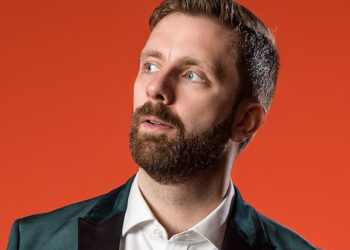

Brighton-based songwriter Nik Barrell returns with “Lost”, a hauntingly intimate single taken from his EP Almost Home. Written and recorded in a self-built van studio while travelling alone through Spain and Portugal, the track carries the stillness of mountain air and the emotional weight of a winter shaped by upheaval, reflection and renewal.
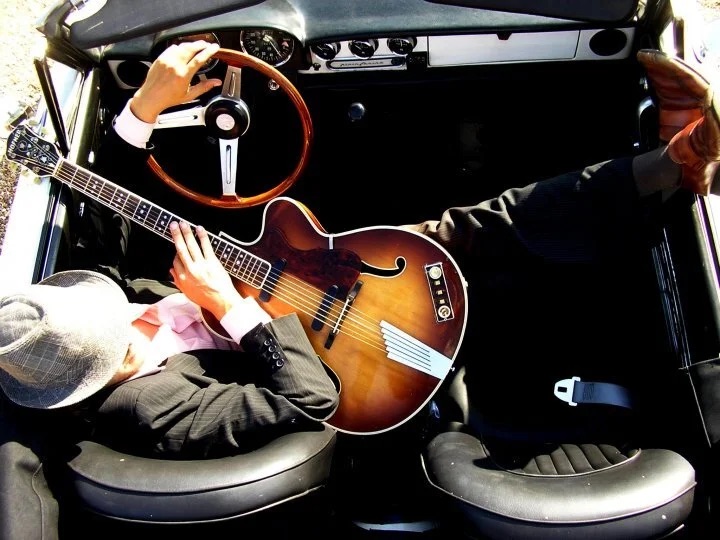
Originally from London and long recognised for his troubadour spirit, Barrell converted an old Renault Master, affectionately named Bertie Van Doogle, into a mobile creative sanctuary. From recording drums in the Portuguese mountains to capturing vocals in the quiet confines of the van, “Lost” is a song shaped as much by geography as by grief, and by movement as much as meaning.
In this Q&A, Nik opens up about solitude, recording in the wild, the philosophy behind making music on the road, and why being “lost” might just be the beginning of finding yourself.
“Lost” was written and recorded while you were travelling alone through Spain and Portugal. How did the landscapes and solitude shape the song?
That’s a great question. I think the solitude in particular was very important. I think one of the things that is happening when you’re making music or any artform is that your processing your experiences of life. Experiences that can seem arbitrary, meaningless and painful can become meaningful, beautiful and valuable through creating art but this requires you to really slow down and face those feelings. That’s where solitude comes in. These days that’s got to include technological solitude as well as physical solitude. I think the immense and beautiful mountains and lakes of Portugal and Spain were extremely important in supporting that solitude. I never felt lonely. I felt very held by the landscape. Being held and having time in that way allowed me to access parts of myself that had been hurt and allowed me to heal those parts through music. My hope is that music created in this way, when listened to, in someway also can speak to and heal those same parts which are hurt in the listener. I know this is a very lofty, possibly pretentious aim, but I do think music works like that and I believe in it.
What inspired you to convert your Renault Master, “Bertie Van Doogle” into a mobile studio, and how did that freedom influence your creative process?
That’s a great question. I think the solitude in particular was very important. I think one of the things that is happening when you’re making music or any artform is that your processing your experiences of life. Experiences that can seem arbitrary, meaningless and painful can become meaningful, beautiful and valuable through creating art but this requires you to really slow down and face those feelings. That’s where solitude comes in. These days that’s got to include technological solitude as well as physical solitude. I think the immense and beautiful mountains and lakes of Portugal and Spain were extremely important in supporting that solitude. I never felt lonely. I felt very held by the landscape. Being held and having time in that way allowed me to access parts of myself that had been hurt and allowed me to heal those parts through music. My hope is that music created in this way, when listened to, in someway also can speak to and heal those same parts which are hurt in the listener. I know this is a very lofty, possibly pretentious aim, but I do think music works like that and I believe in it.
The drums were recorded in the Portuguese mountains. What was it about that environment that felt right for the track?
It’s interesting I think ultimately the environment is always internal. Was it my internal environment that led me to seek out those external environments or the other way round it’s hard to know? I think that when you are creating, it’s essential to have a feeling of playfulness – that no one is watching or judging – and most of all you are not watching or judging yourself. Being parked up in the mountains miles away from anyone definitely gave me that sensation. Setting the drums up on a hilltop amongst all the mountains and listening to the drums reflect back across the valley as I played them (with the most incredible natural reverb) created an extremely playful environment. There were definitely no neighbours to disturb. Occasionally some sheep would pass by but they seemed to like it. Clearly they have good music taste.
You’ve said the conditions in which music is made shape the music itself — can you share a moment when you felt that truth most clearly during this project?
Yes, absolutely – there’s so many ways. Firstly, when you’re travelling around the culture gets into you. Images, sounds rhythms. All of these things enter your unconscious mind and affect your creative pallet. This may happen intentionally or unintentionally, but either way it’s definitely going to have an effect. Secondly, for me, movement itself helps. If I’m trying to think about something or solve some problem (and sometimes creativity can be pretty much just that) I tend to do better through having periods of focus and periods of forgetting about it and moving. Then solutions just come to me. When you change your environment, the pathways in your brain also have to change and it allows for new previously unthought of ideas to come through.
Also the environment affects recording directly. For example, the altitude you are at changes your vocals. It changes the air you have in your lungs. It changes the way your muscles respond in your throat. Singing into a microphone at a high altitude outside will create a completely different type of vocal than you would get inside a studio. Your body is different. The air is different and the reflections created by the environment (which are also picked up by the microphone) are different. Recording vocals inside the van, for example, naturally can sound a bit boxy and metallic but in certain songs that might be just the sound you want. With playfulness, experimenting and rather a lot of luck, you can use all these differences as advantages rather than disadvantages in terms of recording.
Fifty years ago you could say there was a good and bad quality of recording. I mean to say a professional studio would give you a professional sound and a home studio would give you a home studio sound. Everyone knew the difference. I don’t think that means anything now. I think the question around recording now it’s not a question of high or low fidelity, it’s a question of expression. How well does that sound express your feelings, your intentions? Ultimately, although this can be a bit overwhelming, it’s a great thing. It makes music more democratic and our choices more creative.
The song explores disorientation as a step toward self-discovery. When did you realize that being “lost” could be meaningful rather than purely painful?
Well, any kind of progress requires some sense of loss. In order to function and exist in the world we create an idea about ourselves and our environment – who we are, how the world works, expectations, assumptions. I don’t think we’re born with any of these things, maybe a few instincts, but not much. We develop them over time and I don’t see it as a bad thing. Living without these mental structures would be almost impossible. But by definition you are creating fixed points – limitations in your mind. Eventually, as you grow, as your understanding of yourself and the world grows, this kind of once useful mental scaffolding becomes a kind of cage. These mental structures reach the limit of their use and they breakdown – indeed I think we actively break them down. We bring situations into our lives to break them down in order to restructure our thinking and make room for our new understanding of our ourselves and the world. This is not a very pleasant experience and it leaves you extremely disorientated, as your most fundamental beliefs and assumptions breakdown, but if you want to grow beyond your internal mental structure it is unfortunately essential. I’m sure this is an experience most people can relate to. Slowly as new ideas and structures begin to form you begin to feel more stable and look at the world in a new way. These structures will serve you until you outgrow them and have to break them down too. I think this is all fine and perfectly natural and positive, I would just say when you’re in that period of breakdown, give yourself time and be kind to yourself you’re very vulnerable at that point, but something very beautiful is happening.
You’re creating hand-drawn animations for the EP. What role do visuals play in expressing the rawness and motion behind the music?
This is a relatively new development for me, although I’ve been thinking about making videos like this for a while. I’ve always loved drawing and I’ve been doing it on and off ever since I was a child. I particularly loved making comics when I was a kid and reading them of course. When I finish this album and thought about making videos for it, the idea of making animations felt so natural. I really wanted to keep it as organic as possible – keep it in the tactile world of paper – so hand drawing everything, rather than getting on another app, was definitely the way to go for me. The idea of doing a kind of comic strip animation naturally grew out of that. It felt like such a natural fit. Also, if you were gonna make a high budget music video, the first thing you would do is make a thing called a storyboard, which is basically a comic strip, so I’m basically doing that and stopping at the stage where you would hire in all the film crew, special effects units and dancers. It’s a bit more cost-effective this way, although of course my fees are very excessive 😉
What do you hope listeners feel or understand about themselves when they hear “Lost” and the EP Almost Home in general?
Not many people listen to full albums now in the order they are created; including me quite a lot of the time to be honest. But lately, I’ve been making a point of listening to albums as albums again and it really is a different experience.
You can hear the EP ‘Almost Home’ on Spotify and the full album ‘Home’ on Bandcamp (there’s a link in my Spotify bio to the full album on Bandcamp). The album naturally goes deeper, but both the EP and the album are arranged in a way where hopefully the listener is drawn in and taken to a slightly deeper and darker place as the album develops, then returned to the light as it were. This mimics artistically the kind of internal breakdown and restructuring that people go through in life. I think that when you go on this journey with the music you come out of it lightened – a little bit healed, because unconsciously you have gone through that healing process with the music. The same healing process I went through in creating it.
After making music on the road, do you see this nomadic approach continuing, or was this chapter a unique moment in your creative journey?
I’ll definitely be continuing in the nomadic life. I think I’m nomadic by nature and always have been. What really appeals to me it’s moving seasonally and returning to places. I don’t think of the nomadic lifestyle as endlessly drifting. I think of it more as a cycle. Moving further south in the winter and further north in the summer. Each season stopping in places where you have some kind of base – some kind of home where you know people. It’s a way of life that at different times and in different cultures has been absolutely normal. It certainly feels much more natural to me. Birds do it, herds of animals do it, whales do it. I would love to encourage more of my friends to do it. I’m sure it’s not a way of life that suits everyone, but I think there are a lot of people who would benefit emotionally and mentally from moving with the seasons rather than staying and trying to adapt as seasons change around them. I feel it’s a way of life that should be much more normalised, supported and accepted. Perhaps one day it will be. For now though I will find me and Bertie heading south as the night’s close in, trusting in the road and collecting the songs, sounds and inspirations we find along the way to bring back to you next summer. A winter fruit if you like.
With Almost Home and its companion album Home, Nik Barrell charts not just a physical journey across Spain and Portugal, but an emotional one – navigating loss, dismantling old certainties and gently rebuilding a new sense of self.
“Lost” is more than a single. It’s an invitation to pause, to sit with disorientation, and to recognise that breakdown can be a precursor to clarity. As Barrell continues his nomadic path, moving with the seasons and gathering stories from the road, one thing feels certain – wherever he travels next, the landscape will once again find its way into the music.
The video for “Little Blackbird” and “Lost” are out now.