

French composer Olivier Casassus has long been recognised for his cinematic sensitivity, scoring more than 20 films and documentaries with a restrained, emotionally resonant touch. With Jour Bleu, his debut solo piano EP, he turns inward, transforming personal memory, Mediterranean light and intimate reflection into six neoclassical piano pieces.
Blending contemporary classical minimalism with a distinctly Mediterranean sensibility, Jour Bleu invites listeners into a world of resonance, silence and subtle emotional shifts. Recorded on a prepared piano and shaped by the horizon lines of Marseille’s sea and sky, the EP unfolds like a quiet compass, guiding us through love, longing, hope and reflection.
Below, Olivier Casassus speaks about the inspiration behind Jour Bleu, his approach to composition, and why blue (both as a colour and a feeling) defines this deeply personal project.
Jour Bleu is your first solo piano EP. Can you share the story behind its creation and what inspired this very personal project?
“Jour Bleu” began with this idea of what I call a “blue day”, a day I remember because it’s inseparable from an intense emotion or a pivotal moment in my life. Each of those days became its own piece, a small musical portrait shaped by the feeling that first marked it. The title also comes from my life in Marseille: those wide, luminous days when you can lose yourself staring at the horizon, where the sea and the sky layer into many shades of blue. In that space, memories return with a gentle nostalgia, and the present feels slightly suspended. I wrote the EP to hold that sensation, to let distance, light, and tenderness breathe inside simple motifs. So Jour Bleu is both a collection of personal memories and an homage to that Mediterranean blue: music born from intimate moments, called back by the horizon that keeps inviting you to drift and remember.
The EP feels like a journey through memory, emotion, and light. How do you approach translating such intimate feelings into music?
I try to write from the edges rather than the centre,, letting silence, decay, and resonance contour the feeling. I’ll sit with a single interval or a simple motif until it reveals its weight,
the way a memory becomes more vivid in stillness. Harmony is deliberately sparse so that the listener’s own associations can complete the picture. I think of light in terms of timbre and
register: higher, delicate notes for glints and reflections; lower, felted tones for warmth and shadow. The music is less about telling you what to feel and more about holding a space
where feeling can surface.
Also, sometimes – and it’s usually the pieces that I end up liking most – these things just come together, very simply, in these moments of peculiar intensity. These “blue days”, indeed.
Each track has a unique story, from Partisan’s long-distance love to En attendant’s anxious hope. How do you decide which personal experiences become compositions?
When an experience keeps returning, quietly insisting, I know there might be a piece in it. I write a lot, but I keep only what preserves a living thread after many listens. If a sketch still carries its first breath days later, it stays. I also sometimes wonder whether the personal can turn universal: does this moment offer room for someone else’s memory? But honestly, here also, sometimes these things just happen naturally, and manifest themselves; moments turn into memories, and memories into music, or sometimes the other way around… Oftentimes, the less I plan it, the more authentic it is, and the more it sticks with me.
You recorded the EP on a prepared piano, paying close attention to resonance and silence. How did this choice shape the sound and mood of the album?
It was very important for me to record a prepare piano, with authenticity-I wanted to soften the sound with a piece of felt placed between the hammers and the chords, and record every subtle details. Pedal noises, sympathetic vibrations, and the natural room decay became part of the phrasing, almost like breath. This hopefully brings an intimacy and a slightly tactile fragility to the sound. I wanted the mood to be nocturnal but not dark; a hush where you notice the smallest changes, and those details carry the emotional weight.
Your background includes composing for film. How has your cinematic sensibility influenced the way you write and structure your solo piano pieces?
Scoring music for TV & films has taught me to think in scenes and to trust restraint. I structure pieces like sequences: a motif appears, the camera lingers, something shifts in framing rather than in volume. I’m attentive to pacing, how long a shot (or chord) needs to live before the cut. I also use thematic motifs as you would in a score, allowing them to reappear with altered context so that the narrative feels cohesive without being literal. Negative space, the silence, does as much storytelling as the notes.
The visual universe of Jour Bleu is deeply tied to the colour blue, the sea, and the sky. How important is the visual aspect of your music in shaping the listener’s experience?
Very important. Coloru helps me choose harmony and register; blue, for me, is temperature, distance, and a kind of gentle clarity. The sea and sky suggest horizon lines, movement that is
constant but unhurried, which I translate into slow harmonic drift and recurring motifs. I think of the visuals as an invitation into the music’s atmosphere: they frame the listening as you might frame a photograph, guiding attention without dictating interpretation.
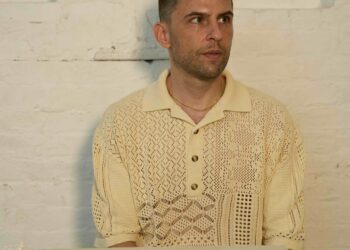
I also want to give a major shout‐out to Theo Saffroy, the brilliant photographer who captured these images and perfectly translated the project’s mood and atmosphere into visuals. The
result is even better than I could have hoped for, he truly understood my music and has helped move the project forward.
What do you hope listeners will take away from Jour Bleu? Is it more about reflection, meditation, or perhaps a new perspective on everyday moments?
If Jour Bleu can offer a small pocket of time, five or ten minutes where the ordinary becomes luminous, that’s huge. And honestly, if the listeners simply just get anything positive from their experience listening to Jour Bleu, whatever the music can trigger in them, it’ll be great just the same. I hope people feel allowed to slow down, to notice the grain of a sound or the way a chord fades into the room. It can be reflective, even meditative, but I’m most interested in companionship: music that quietly sits with you and gives shape to feelings that don’t always have words.
Looking forward, do you see yourself exploring other instruments or formats, or will piano remain the primary voice of your solo work?
It’s an interesting question, because I only started playing the piano seriously pretty late in my life, actually. I first discovered music on the clarinet at the classical conservatory in the small French city I grew up in, I must have been about seven when I started. Later, I played a lot of guitar and explored other instruments, but I was always drawn to the piano. There was one at my grandparents’ house, and whenever I was there, quite often, I would sit and try things. I would improvise very simple melodies while my grandmother was reading quietly in the living room. I often would cover songs that she liked, like old French songs by Jean Sablon or Yves Montand, or standards by Nat King Cole-and I’d hear her hum a little bit at the music. I
eventually inherited that piano after my grandmother passed, and that gesture unlocked something in me, that sense that she believed in me, that something special happened in those moments spent together without speaking.
Today, the piano is home to me, it’s meditation, it’s peace, and it will likely remain the heart of my solo work, but I’m curious about extending its world. It’s also a true beginning, I’m learning a ton every week, every day; It’s a never-ending cycle, and I love that.
I’m excited to push my work on sound and texture further. Lately, I’ve been recording my piano a lot in the studio and routing the signal through chains of connected hardware, from synthesisers to guitar pedals and other devices. The results aren’t always great, still very experimental, but I’m captivated by the engineering side of things and by layering stacks of sound.
I’m already working on a new solo piano project, quietly for now, and I imagine the one that follows will lean into sound experimentation, perhaps with an electronic colour. The guiding principle will remain the same: intimacy, space, and a focus on the detail that makes a moment feel alive.
A Mediterranean Meditation in Sound
With over 100,000 Spotify streams, multiple 2025 single releases and upcoming live dates, including supporting Pieter de Graaf’s 2026 tour, Jour Bleu marks an important new chapter for Olivier Casassus.
At its heart, this neoclassical solo piano EP is an allegory of light and intimacy: Marseille’s long blue horizons mirrored in the deep relationships that anchor us. Through prepared piano textures, restrained composition and cinematic pacing, Jour Bleu invites listeners to slow down, listen closely and rediscover the quiet poetry of everyday moments.For fans of contemporary classical music, cinematic piano compositions and meditative instrumental soundscapes, Jour Bleu offers something rare: music that doesn’t demand attention; but rewards it.
Connect with Olivier on Instagram